Your Cart (0)
Your cart is empty
Tax included and shipping calculated at checkout
Drawer menu
Tax included and shipping calculated at checkout

Last Updated: September 28, 2026
Finding the best embroidery machines for etsy sellers starts with one question: what will you actually make? This guide from Stitch Pro Supply covers three machines for different stages of an Etsy business, from a first listing to steady production.
| Machine | Price | Hoops Included | Best For |
|---|---|---|---|
| SINGER SE9180 | $799.99 | Standard embroidery hoop | First-time Etsy sellers |
| DESIGNER QUARTZ 29 | $1,399.00 | 170 x 100 mm and 100 x 100 mm | Shops scaling past hobby volume |
| TOPAZ 55Q | $3,999.00 | Quilting-focused setup | Quilters adding embroidery |
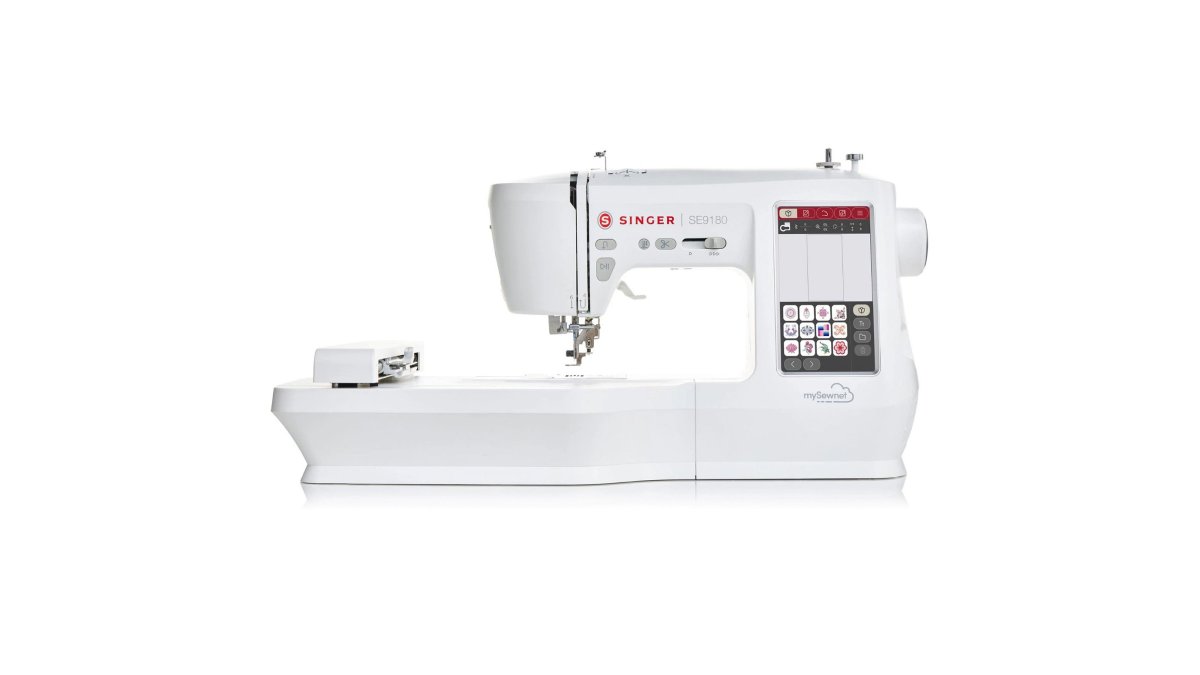
The SINGER SE9180 is the machine to buy if you have never embroidered before and want to list your first item this month. At $799.99, it covers sewing and embroidery, so you are not buying two machines to make one product.

When your shop moves past a few orders a week, the DESIGNER QUARTZ 29 is the upgrade that keeps pace. At $1,399.00, it sits between a starter machine and a production unit, with two hoops: 170 x 100 mm and 100 x 100 mm.

The TOPAZ 55Q is built for the quilter who already sells quilts. At $3,999.00, it is the pick for any Etsy shop that leans on quilting.

Starting an embroidery business from home comes down to four numbers: machine cost, cost per finished item, minutes per item, and sellable hours per week. Most guides stop at the first. Sellers who last model all four before they buy.
Before you price anything, build the true cost of a single unit. A monogrammed cotton tote is a useful example because the inputs are easy to see:
Break-even is machine price divided by profit per item. If your tote clears $15 after hard costs, a $799.99 machine pays for itself at roughly 54 sales. A $1,399.00 machine needs about 94 sales at the same margin. A $3,999.00 machine needs about 267.
Profit per hour, not profit per sale, decides whether the shop is worth running. A 4,000-stitch design on a single-needle combo machine commonly runs 8 to 15 minutes at moderate speed, but that is stitch time only. Add hooping, trimming, pressing, photographing, and packing, and a realistic per-item total lands between 20 and 40 minutes.
A home embroidery shop needs a small cash cushion for blanks and stabilizer before the first sale clears. Budget two to three weeks of inventory at your expected order rate so one busy weekend does not stall production.
The best embroidery software for beginners is usually no software at all, at least at first. Stock designs are ready-made files you load and stitch. Digitizing converts artwork into a stitch file your machine can read, and it takes practice to do well.
SINGER® SE9180 Sewing & Embroidery →
The most profitable embroidery items to sell are small, personal, and repeatable, and the reason is mechanical: they fit inside a standard hoop, run a low stitch count, and use one blank size.
Hoop size quietly decides what you can sell. A 100 x 100 mm hoop handles a monogram, a small name, a pet bandana motif, or a pocket-sized patch. A 170 x 100 mm hoop opens up a full chest logo, a larger tote design, or a baby bib with a name and a small graphic. Anything wider than your largest hoop means re-hooping, and re-hooping is where alignment errors and wasted blanks come from.
Stitch count and hoop changes drive time, and time drives your hourly rate. A rough pattern most sellers notice:
Names, dates, and occasions bring buyers back. A customer who orders a monogrammed baby bib often returns for a matching towel, then a gift for a friend. Repeat buyers cost nothing to acquire, which is why personalized categories outperform generic ones even at similar margins.
Speed per item sets your hourly rate, not the sale price. A design that takes 40 minutes to stitch caps your day no matter what you charge, and a $30 item taking 15 minutes beats a $60 item taking an hour. Track profit per hour, not profit per sale, and let that number decide which listings you scale and which you retire.
Personalized items move fastest: monogrammed towels, custom baby blankets, pet bandanas with names, and embroidered hats. Small batch items with quick turnaround sell well because buyers want customization without a long wait. Start with one or two product types, test demand, then expand. Avoid oversaturated categories like generic quote pillows unless you have a unique design angle.
The SINGER SE9180 at $799.99 is a solid starting point for Etsy sellers. It offers over 150 built-in embroidery designs and 250 stitches, plus a 7-inch touch screen and CREATIVATE connectivity for app notifications. If your budget allows more, the HUSQVARNA VIKING DESIGNER QUARTZ 29 at $1,399.00 adds 180 designs, two hoops, and cloud storage for scaling production.
Profitability depends on your pricing and volume. A machine like the SINGER SE9180 costs $799.99 upfront. If you sell personalized items at $15-25 each with $3-5 in materials, you break even after roughly 40-50 sales. After that, each sale contributes to profit. Keep your design library efficient and batch similar orders to reduce setup time per item.
Plan to invest $800-$1,400 for a machine that handles production use without constant breakdowns. The SINGER SE9180 at $799.99 covers entry-level needs. The HUSQVARNA VIKING DESIGNER QUARTZ 29 at $1,399.00 adds larger hoop sizes and cloud connectivity for growing order volume. Spending less often means slower speeds and smaller hoops that limit what you can sell.
You can start with built-in designs and stock patterns, but custom orders require digitizing software. The HUSQVARNA® VIKING® DESIGNER QUARTZ™ 29 includes CREATIVATE™ connectivity with a 30-day free trial, which lets you digitize photos and access thousands of designs in the CREATIVATE™ Library on-screen. For beginners, stock designs work fine for your first 20-30 sales. Add digitizing once customers request personalized logos or names.


