Your Cart (0)
Your cart is empty
Tax included and shipping calculated at checkout
Drawer menu
Tax included and shipping calculated at checkout

Last Updated: October 30, 2026
Quick Summary
Regular sewing machines can embroider only in free-motion mode, where you drop the feed dogs and guide the fabric yourself, so results are hand-guided and not repeatable. For automated digitized designs, add an embroidery-only unit or choose a combo machine that sews and embroiders.
Here's the question many makers ask: do you actually need two machines? The answer is a sewing machine joins fabric with a lockstitch, while an embroidery machine holds fabric taut in a hoop and moves it under the needle to stitch digitized designs. One builds the garment.
A lockstitch runs through two layers of fabric, pulled tight by a bobbin underneath. An embroidery machine works differently: the hoop moves, the needle stays put, and a design file directs both. That's why embroidery machines need hoops, stabilizers, and design software, while sewing machines need a presser foot, feed dogs, and a seam allowance.
The confusion usually comes from the word "machine embroidery." Plenty of regular sewing machines can do a version of it. They just can't do it automatically.
Feed dogs pull fabric forward on a sewing machine. That constant motion is what makes a straight seam possible, and it's also what makes free-motion embroidery tricky, because you have to drop the feed dogs to move the fabric yourself.
Embroidery machines flip the logic. The fabric stays clamped in a hoop, and the machine's arm moves the hoop in X and Y directions while the needle punches thread.
That single mechanical difference explains nearly every practical trade-off below.
An embroidery-only machine does one job and does it well. A combo machine sews, quilts, and embroiders from the same unit.
If you own a sewing machine you like, an embroidery-only unit adds capability without replacing anything.
Combo machines trade a little embroidery speed for versatility. For a deeper look at combo versus separate machines, that decision is broken down step by step.
You can embroider on a standard sewing machine, but only in free-motion mode. There's no automatic design stitching, no hoop arm, and no digitized file.
The setup matters more than the technique:
Stabilizer choice trips up more beginners than anything else. This guide to tear away vs cut away vs wash away stabilizers explains which type suits which fabric.
Watch out: skipping stabilizer to save time almost always ends in puckered fabric and a design that shifts mid-stitch.
Free-motion embroidery with a sewing machine produces hand-guided stitching, not repeatable digitized designs. Expect a learning curve measured in practice hoops, not minutes.
Your first attempts will look uneven, that's normal.
What you get in return is total freedom. No design files, no software, no hoop size limits.
What you don't get is consistency. Two identical free-motion motifs will never match exactly.
Three routes get you embroidered fabric without buying an embroidery machine: hand embroidery, free-motion work on a sewing machine, and sending designs out to a commercial embroiderer. Each has a different cost structure, skill curve, production speed, and finish quality. The table below is the comparison most buying guides skip.
| Method | Upfront Cost | Ongoing Cost | Skill Curve | Speed | Finish Quality | Best For |
|---|---|---|---|---|---|---|
| Hand embroidery | Under $25 for a hoop, needles, and floss | Floss and fabric, a few dollars per project | Weeks of practice for clean satin and chain stitch | Slowest; hours per small motif | Highest detail on curves and irregular surfaces; texture machines flatten | One-offs, heirloom pieces, curved or 3D surfaces |
| Free-motion on a sewing machine | $0 if you own a machine; $15-$40 for a darning or free-motion foot | Thread and stabilizer, roughly $5-$15 per project | Days to weeks; speed control is the hard skill | Moderate; minutes per small motif once proficient | Hand-guided and intentionally irregular; not repeatable | Names, labels, sketching, art pieces |
| Outsourced commercial embroidery | $0 equipment; digitizing setup fee typically $25-$75 per design | Per-piece pricing plus minimum order quantities | None; you supply artwork | Fastest at volume; days including shipping | Consistent and repeatable; limited by the digitizer's file | Volume runs, uniforms, team orders, resale |
Hand embroidery is the original machine-free method, and it still beats every alternative for detail work on curved or irregular surfaces. French knots, satin stitch, and chain stitch give you texture that machine embroidery flattens out. The trade-off is time: a small motif a commercial machine stitches in under a minute can take an hour or more by hand. Cost is minimal, a hoop, needles, and a few skeins of floss cost less than a tank of gas, but clean satin and even chain stitch take weeks of practice, not an afternoon.
SINGER® SE9180 Sewing & Embroidery Machine →
Free-motion embroidery needs a sewing machine you probably already own plus a darning or free-motion foot, roughly $15-$40. You drop the feed dogs, lower the presser foot, and steer the fabric yourself. The result is hand-guided and intentionally irregular, great for names on quilt labels or sketching a flower onto a denim jacket, but not repeatable. Two identical motifs will never match exactly, so it's a poor fit if your listings promise uniform embroidery.
Outsourcing makes sense when you need volume, not one-offs. A commercial embroiderer handles digitizing, stitch-out, and finishing. You pay per piece, and minimum order quantities usually apply. The hidden cost is digitizing: converting artwork into a stitch file typically runs $25-$75 per design as a setup fee, and a poorly digitized file causes thread breaks and puckering no matter how good the hardware is.
Match the method to the job, not to the equipment you wish you owned:
If two or more of those describe your work, that is the signal to consider a dedicated embroidery machine rather than stretching an alternative past its ceiling.
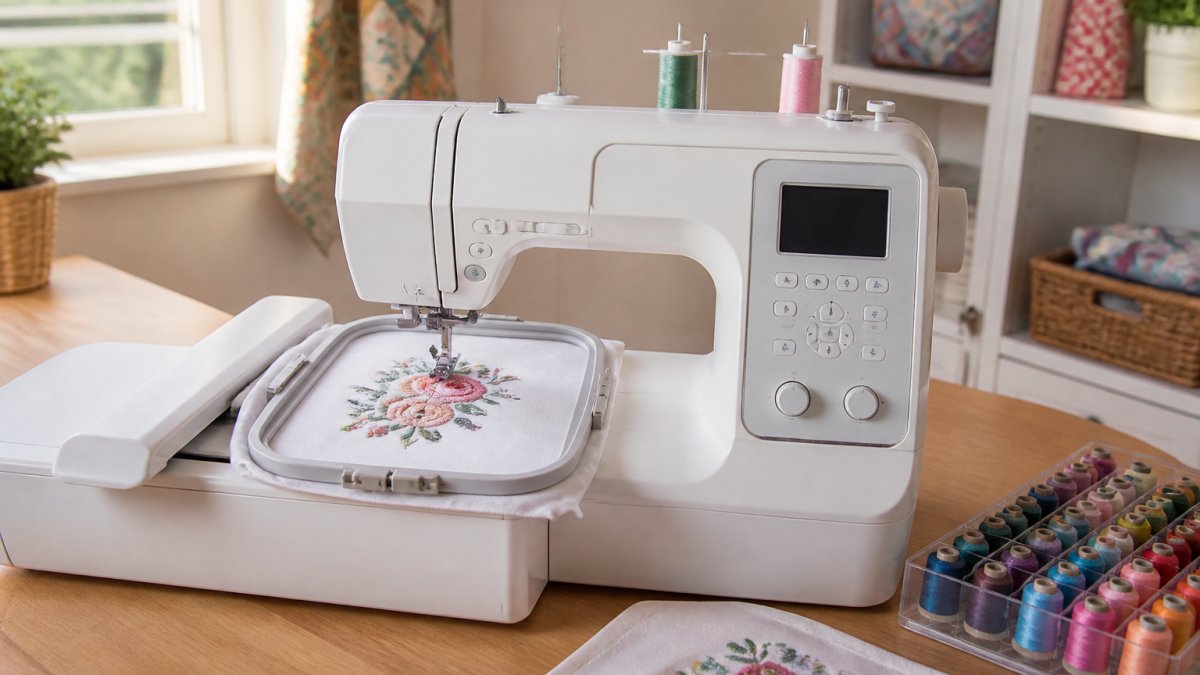
Combo machines span a wide price range, and the jump between tiers buys real capability, not just a nicer screen.
| Machine | Price | Embroidery Designs | Stitches | Best For |
|---|---|---|---|---|
| SINGER® C5980Q Patchwork™ Plus | $339.99 | None (sewing/quilting only) | 417 | Quilters who want a sewing base first |
| SINGER® SE9180 | $799.99 | 150+ built-in | 250+ | Beginners adding embroidery to sewing |
| HUSQVARNA® VIKING® DESIGNER QUARTZ™ 29 | $999.00 | 180 built-in | 250 | Makers who want hoops and fonts included |
| HUSQVARNA® VIKING® SAPPHIRE™ 930 | $2,199.00 | None (sewing only) | 200+ | Sewists prioritizing stitch quality and space |
| HUSQVARNA® VIKING® TOPAZ™ 55Q | $3,299.00 | None (sewing only) | Multiple | Advanced sewists and quilters |
The SINGER® SE9180 is a strong option for many beginners.

The DESIGNER QUARTZ™ 29 includes two embroidery hoops (170 mm x 100 mm and 100 mm x 100 mm), 10 embroidery fonts, and 180 built-in designs.

You can also view the SINGER® SE9180 and the HUSQVARNA® VIKING® DESIGNER QUARTZ™ 29 directly.
Start with what's already in your sewing room, then work through four filters in order: existing equipment, project types, space, and total budget. Most buyers skip straight to price and end up with a machine that duplicates what they own or cannot stitch the designs they actually want.
If you own a sewing machine you understand well, adding an embroidery-only unit is one upgrade path: you keep your familiar seams, gain automated designs, and avoid paying twice for the sewing half. If your current machine is basic or you're buying your first one, a combo machine avoids duplicating the sewing half, though combo embroidery areas tend to run smaller than standalone units at the same price.
Project type drives hoop size more than any other spec. A 4-inch hoop handles monograms, small logos, and patch corners. A 5-by-7-inch hoop covers most garment personalization and is the practical minimum for adult-size left-chest designs. Anything larger, jacket backs, quilt blocks, large tote panels, pushes you into a standalone machine with a bigger embroidery field, because combo machines at entry prices rarely exceed the 5-by-7 range.
| Project | Minimum Hoop | Typical Machine Path |
|---|---|---|
| Monograms, small logos, patch corners | 4 in | Entry combo or embroidery-only |
| Left-chest names, hat fronts, small gifts | 5 x 7 in | Mid combo or embroidery-only |
| Jacket backs, quilt blocks, large totes | 6 x 10 in or larger | Standalone embroidery machine |
A combo machine occupies one footprint; a sewing machine plus an embroidery-only unit occupies two, plus storage for hoops and stabilizer. If your worktable is a dining table you clear each night, a combo machine is the practical choice regardless of budget. With a dedicated studio, the two-machine setup is easier to live with because you never reconfigure one unit between sewing and embroidery.
Weigh total cost of ownership, not sticker price. Embroidery machines need hoops, stabilizers, thread, needles, and often software subscriptions. A $799 combo machine with no accessories budget is a bigger commitment than the price tag suggests. Embroidery machines also need hoops, stabilizers, and thread on top of the machine price.
Work the filters in order and the choice usually resolves itself:
If you answer "yes" to owning a good machine and "yes" to large designs, the honest answer is two machines: keep your sewing machine and add a standalone embroidery unit. If you answer "no" to both, a combo machine gets you stitching sooner with one purchase and one footprint.
Yes, within limits. A regular sewing machine can handle free-motion embroidery if you lower or cover the feed dogs and use a darning or embroidery foot, which lets you move the fabric yourself to stitch letters and simple motifs. What it cannot do is read digitized designs and stitch them automatically. For repeatable, multi-color designs, you need an embroidery-capable machine or an embroidery-only model.
A sewing machine joins fabric with seams, hems, and buttonholes, and its feed dogs pull fabric in a straight line under the needle. An embroidery machine holds fabric taut in a hoop and moves the hoop itself, following a digitized design file, so the needle stays in one place while the fabric travels. Sewing machines build garments; embroidery machines decorate them.
If you already own a sewing machine you like, an embroidery-only model adds capability without duplicating what you have. If you are starting from nothing, a combo machine such as the SINGER SE9180 at $799.99 covers both sewing and embroidery in one unit, with over 150 built-in designs and more than 250 stitches. Combos save space and money; separate machines let each do its job without compromise.
Three routes work: hand embroidery with a hoop and needle, free-motion embroidery on a standard sewing machine, or outsourcing to a service that stitches your digitized file on their equipment. Hand work suits small personal pieces and gives you full control. Free-motion is faster but requires practice to keep stitch length even. Outsourcing makes sense for production runs where you need consistent results without buying a machine.
Prioritize adjustable or drop feed dogs, a free-motion or darning foot, and variable speed control for free-motion work. For combo machines, check the embroidery area and included hoop sizes, the number of built-in designs and fonts, and whether the screen is large enough to preview designs. The HUSQVARNA VIKING DESIGNER QUARTZ 29, for example, includes two hoops (170 mm x 100 mm and 100 mm x 100 mm) and 180 built-in designs.


