Your Cart (0)
Your cart is empty
Tax included and shipping calculated at checkout
Drawer menu
Tax included and shipping calculated at checkout

Last Updated: September 20, 2026
A quilting and embroidery machine combo benefits your creative workflow by consolidating two essential functions into a single workspace. Instead of toggling between separate machines, you move seamlessly from piecing quilt blocks to embellishing designs, all without rewiring your setup or managing duplicate supplies. At Stitch Pro Supply, we've watched makers discover that this consolidation transforms not just how they work, but what they're capable of creating.

The real advantage isn't convenience alone. It's the elimination of decision fatigue. When you have one machine that handles both quilting and embroidery, you stop asking "which machine should I use?" and start asking "what should I make next?" That mental shift matters more than most guides acknowledge.
For beginners, the combo approach removes a common barrier: the fear of investing in the wrong equipment. You're not choosing between two separate purchases. You're choosing one versatile tool that grows with your skill level. For experienced makers running production work, the efficiency gain compounds, faster project throughput, less downtime switching between machines, and a cleaner workshop footprint.
Quilting and embroidery machine combos eliminate the need for two separate machines, which directly reduces your physical footprint and initial investment. A single combo unit occupies roughly the space of one standard sewing machine, while two standalone machines would demand double that real estate. This matters whether you're working in a dedicated studio or carving out creative space in a corner of your home.
The cost advantage extends beyond the purchase price. You're investing in one set of maintenance supplies, one bobbin system to manage, one needle plate to keep calibrated. When stabilizer runs out or thread breaks, you're stocking one machine's preferences, not two. The SINGER® SE9180 Sewing & Embroidery Machine at Stitch Pro Supply starts at $799.99, delivering both functions without requiring a second five-hundred-dollar purchase.

Beyond the initial outlay, consider the hidden costs of maintaining separate machines. Tension adjustment, presser foot pressure calibration, feed dogs alignment, these aren't one-time setups. They're ongoing maintenance tasks. Consolidating to one machine cuts that workload significantly. You're also reducing electricity consumption, storage clutter, and the mental overhead of remembering which machine has which settings dialed in.
For makers planning to scale their work, the combo approach delays the point at which you'd need to invest in specialized production equipment. Most beginners and intermediate crafters never outgrow a quality combo machine. The ones who do have already generated enough revenue to justify the upgrade.
Switching between quilting and embroidery modes on a single machine takes seconds, just a hoop change, a mode toggle, and you're ready to work. Compare that to the workflow of moving between two separate machines: clearing one workspace, retrieving the other machine, repositioning it, threading it, adjusting tension, and confirming your settings. That's not thirty seconds of downtime. That's five to ten minutes of friction every time you shift tasks.
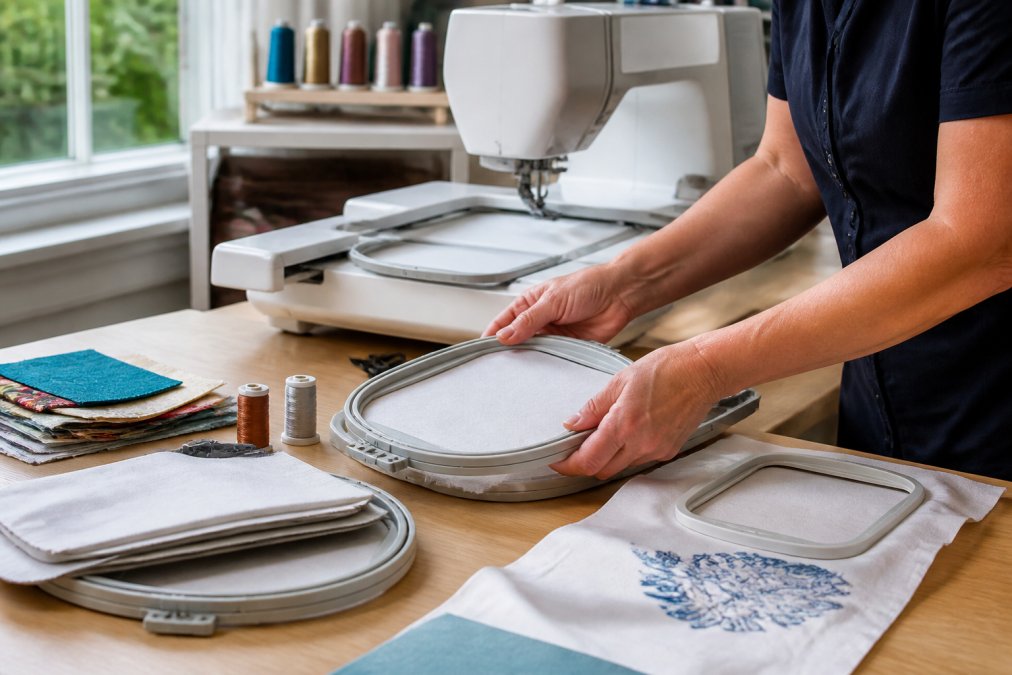
Project speed improves because you're not losing momentum. A quilter who wants to add embroidered labels to finished blocks stays in flow. An embroidery artist who wants to quilt around a design doesn't abandon the piece halfway through. The machine becomes an extension of your creative intent rather than a constraint that forces you to batch work by machine type.
The HUSQVARNA® VIKING® DESIGNER QUARTZ™ 29 Sewing & Embroidery Machine at Stitch Pro Supply ($1,399.00) exemplifies this efficiency with its large 7" color touch screen and 250 stitches for sewing plus 180 embroidery designs. You're not hunting through menus or guessing at settings, the interface keeps your most-used options visible and accessible.
Real throughput gains emerge when you're managing multiple projects. A maker producing custom quilted gifts with embroidered personalization can complete one item's full workflow on a single machine. No hand-off to a second workspace, no risk of settings drift between machines. The embroidery field size and throat space become your limiting factors, not machine availability.
A standalone embroidery machine excels at one thing: embroidery. It has a larger embroidery field, more specialized design management features, and typically faster stitch speeds for production work. If your primary focus is embroidery, running an Etsy shop of embroidered apparel, for example, a standalone machine may deliver better results per dollar spent on that specific function.
A combo machine prioritizes versatility over specialization. The embroidery field is smaller than a dedicated embroidery machine's. The stitch library is broader but less densely focused on embroidery-only features. The quilting capabilities won't match a dedicated long-arm quilter. But here's where the trade-off becomes strategic: if you're doing both activities regularly, the combo's balanced approach saves time and space that specialization would cost you.
HUSQVARNA® VIKING® DESIGNER QUARTZ™ 29 →
The decision hinges on your actual workflow. Ask yourself: Do I spend 80% of my time embroidering and 20% quilting, or is it closer to 50-50? A heavily skewed ratio favors the standalone. A balanced or mixed workflow favors the combo. The SINGER® SE9180 handles both well enough for most hobbyists and small production businesses, it's not the best embroidery machine or the best quilting machine, but it's genuinely competent at both.
Resale value also differs. Standalone embroidery machines hold their value better in the secondhand market because buyers seeking them are usually serious about embroidery specifically. Combo machines appeal to a broader audience but sometimes command lower resale prices because buyers perceive them as "jack of all trades, master of none." That's a fair perception in some cases, but not always.
Beyond the machine itself, beginners need stabilizer, quality thread, and embroidery hoops in the right sizes. The Stick N Stitch Self Adhesive Wash Away Stabilizer from Sulky Of America ($15.99 at Stitch Pro Supply) handles both machine embroidery and quilting applications, it's printable, pressure-sensitive, and dissolves completely in water. You're not buying separate stabilizer types for separate functions.

Hoop sizes matter more than beginners expect. The SINGER® SE9180 includes two hoop sizes, which covers most beginner projects. As you progress, you'll want hoops matching your embroidery field dimensions to maximize design space without repositioning. A smaller hoop is useful for detailed work; a larger hoop speeds up projects with broad design areas.
Thread quality affects both machine performance and finished appearance. Cheap thread breaks more frequently, creating downtime and frustration. Quality thread feeds smoothly through both the needle and bobbin system, reducing tension issues and thread breakage. Budget for good thread early, it's the cheapest insurance against machine frustration.
Presser foot pressure and feed dogs deserve attention. Quilting requires different foot pressure than embroidery. A combo machine lets you adjust these settings per mode, but you need to understand what adjustment means for your specific fabric and technique. The machine's sewing guide reference chart becomes your reference, don't skip reading it.
The bobbin system varies by machine. Some use plastic bobbins, others metal. Understand your machine's bobbin type early, and keep spares on hand.
Test the interface if possible. A 7" color touch screen is more intuitive than a small LCD for most users, but only if the menu structure makes sense to you. Some machines organize functions logically; others bury settings in confusing submenus. If you can't test in person, watch tutorial videos from the manufacturer. How quickly can someone navigate to a common task? That's your daily experience.
Maintenance complexity on a combo machine sits between a basic sewing machine and a specialized embroidery unit. You're managing needle plate alignment, bobbin tension, and thread path routing for both modes. The good news: most adjustments are simpler than on two separate machines because you're learning one interface, one tension system, one needle threading sequence.
Combo machines eliminate the need to purchase two separate pieces of equipment, reducing both upfront costs and physical studio space. You switch between sewing, embroidery, and quilting modes on one platform, which speeds up project transitions and reduces downtime. The SINGER® SE9180, for example, offers 250 stitches and 150+ embroidery designs in a single footprint, making it ideal for makers who work across multiple techniques without sacrificing workspace.
Combo machines work well for both. Beginners benefit from learning multiple techniques on a single interface with a large touchscreen and automatic features like needle threading. Experienced quilters appreciate the ability to combine quilting, sewing, and embroidery in one workflow, especially for production work. The key is choosing a model with sufficient hoop size, stitch density control, and tension adjustment capabilities to match your skill level and project complexity.
Yes, many modern embroidery machines include quilting stitches and can handle free motion quilting with the feed dogs disengaged. However, true quilting-dedicated machines often have larger throat space, more powerful motors, and specialized quilting frames for handling larger projects. A combo machine bridges this gap by offering both embroidery hoops and quilting functionality, though you'll want to verify the embroidery field size and presser foot pressure adjustment before committing to high-volume quilting work.
Prioritize hoop size (larger fields mean fewer design transfers), throat space for garment construction, stitch density options for different fabric weights, and touchscreen usability. Check bobbin system capacity, automatic thread cutter features, and USB connectivity for design transfer. Consider stabilizer compatibility and tension adjustment range. The HUSQVARNA® VIKING® DESIGNER QUARTZ™ 29 includes two embroidery hoops, 250 stitches, and CREATIVATE™ cloud connectivity for design access, making it a strong choice for serious makers.


